Launch offer — valid today only

📄 Digital book in PDF · read it on your phone or print it

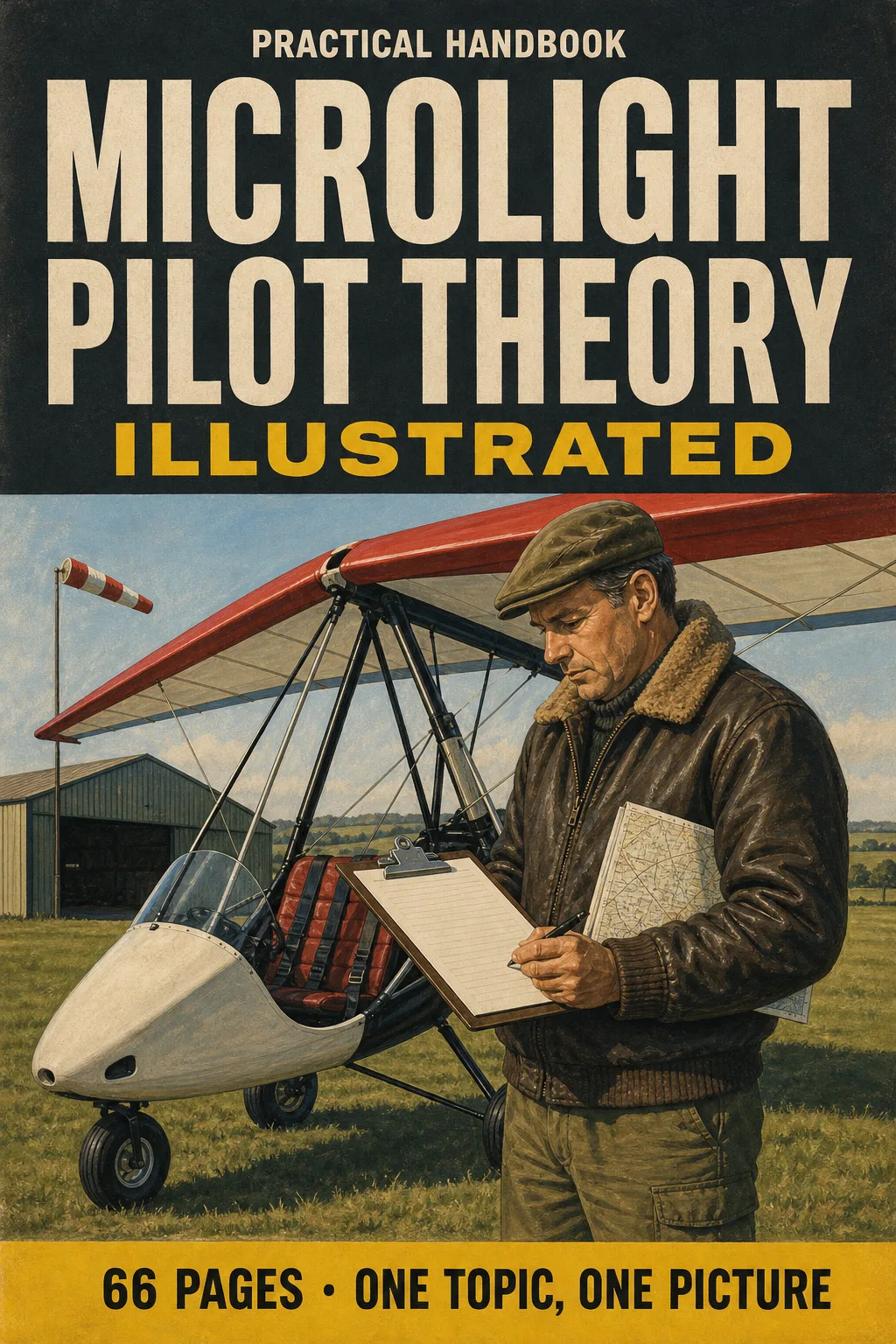
Microlight Ground Exam Theory in Drawings: Every Subject, Always in the Same Order One Topic on Every Page

For the five UK microlight ground exams: Air Law, Meteorology, Navigation, Human Performance and Aircraft Technical. Flexwing and three-axis, in knots, feet and hPa. Every topic has its own page: the drawing first, then what you need to remember. 66 illustrated pages.

GET THE ILLUSTRATED BOOK + 2 FREE BOOKS

🔒 Secure checkout · PDF by email · 30-day guarantee

Every topic, its own pageEach rule and calculation drawn, with the explanation beside it
66 illustrated pages8 parts, from the four forces to the last-week exam review
Up-to-date sourcesCAA publications, the UK AIP and CAP 413
PDF by emailFormat

Look Inside the Book

Every page has one big drawing and a box with the numbers, rules and steps you need to know:

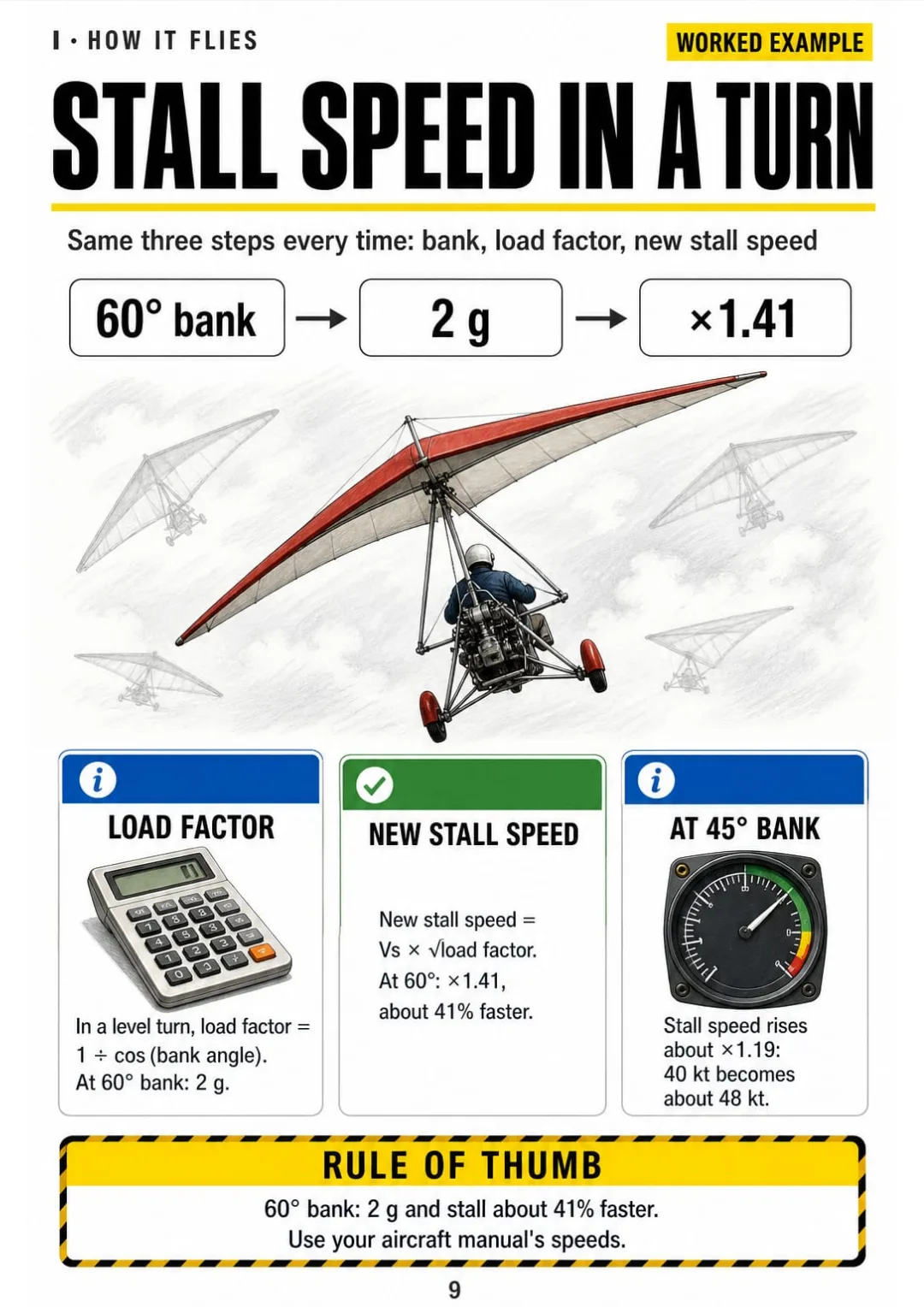
Load factor 1/cos(bank), stall speed × √load factor: at 60° bank, 2 g and 40 kt becomes about 57 kt.
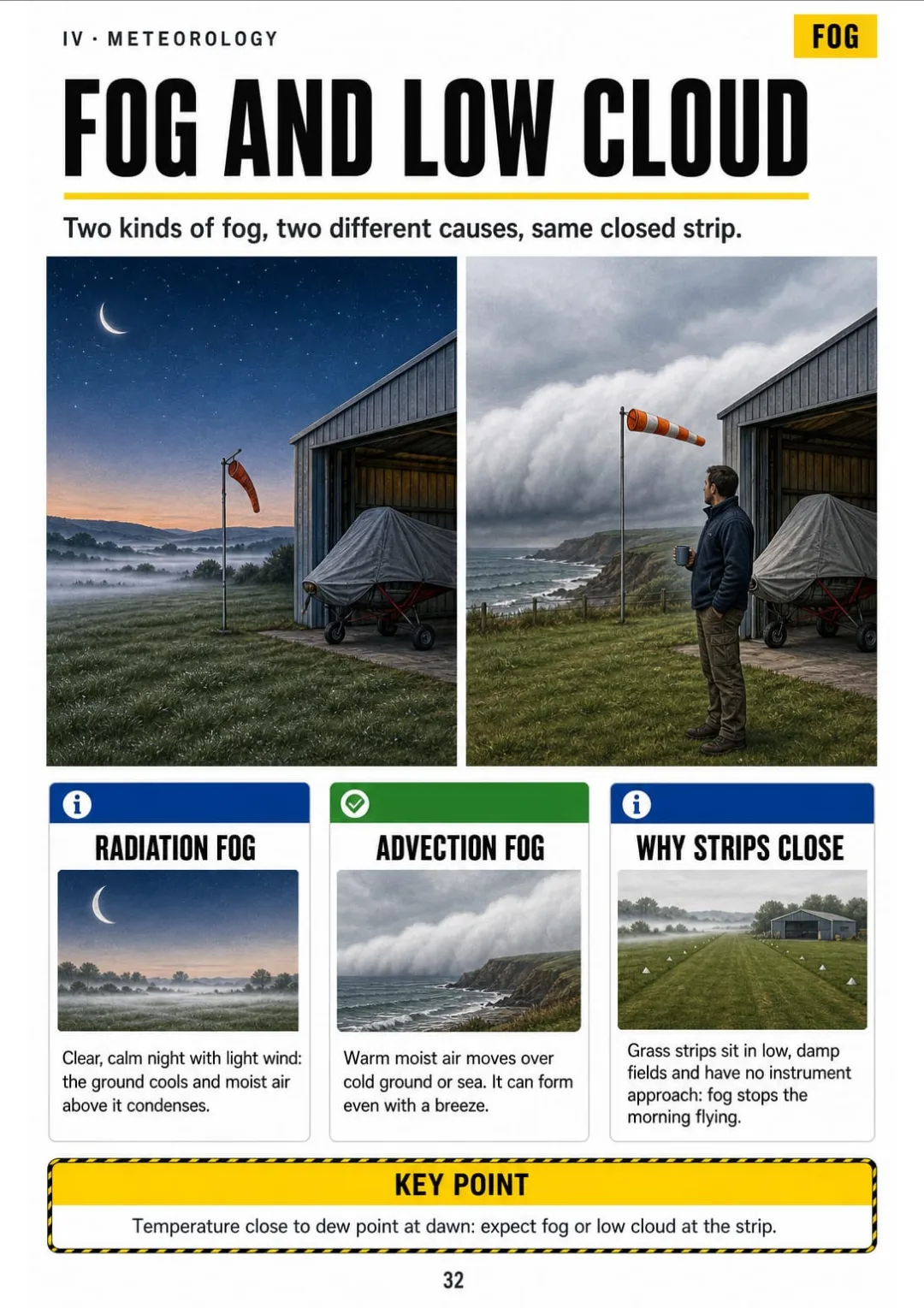
Radiation fog: clear calm night. Advection fog: warm moist air over cold ground or sea
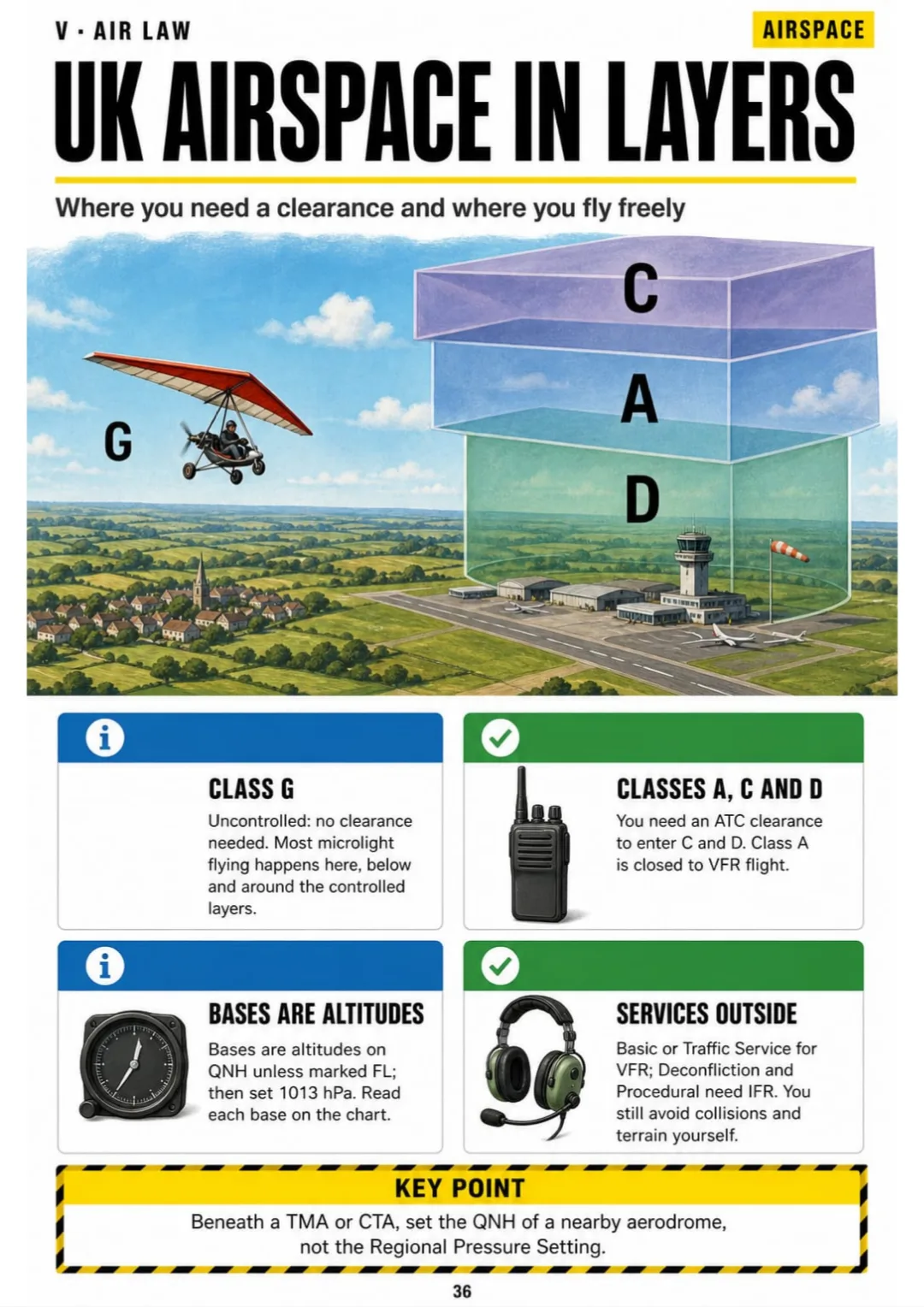
Class D needs a clearance; Class G is where most microlight flying happens
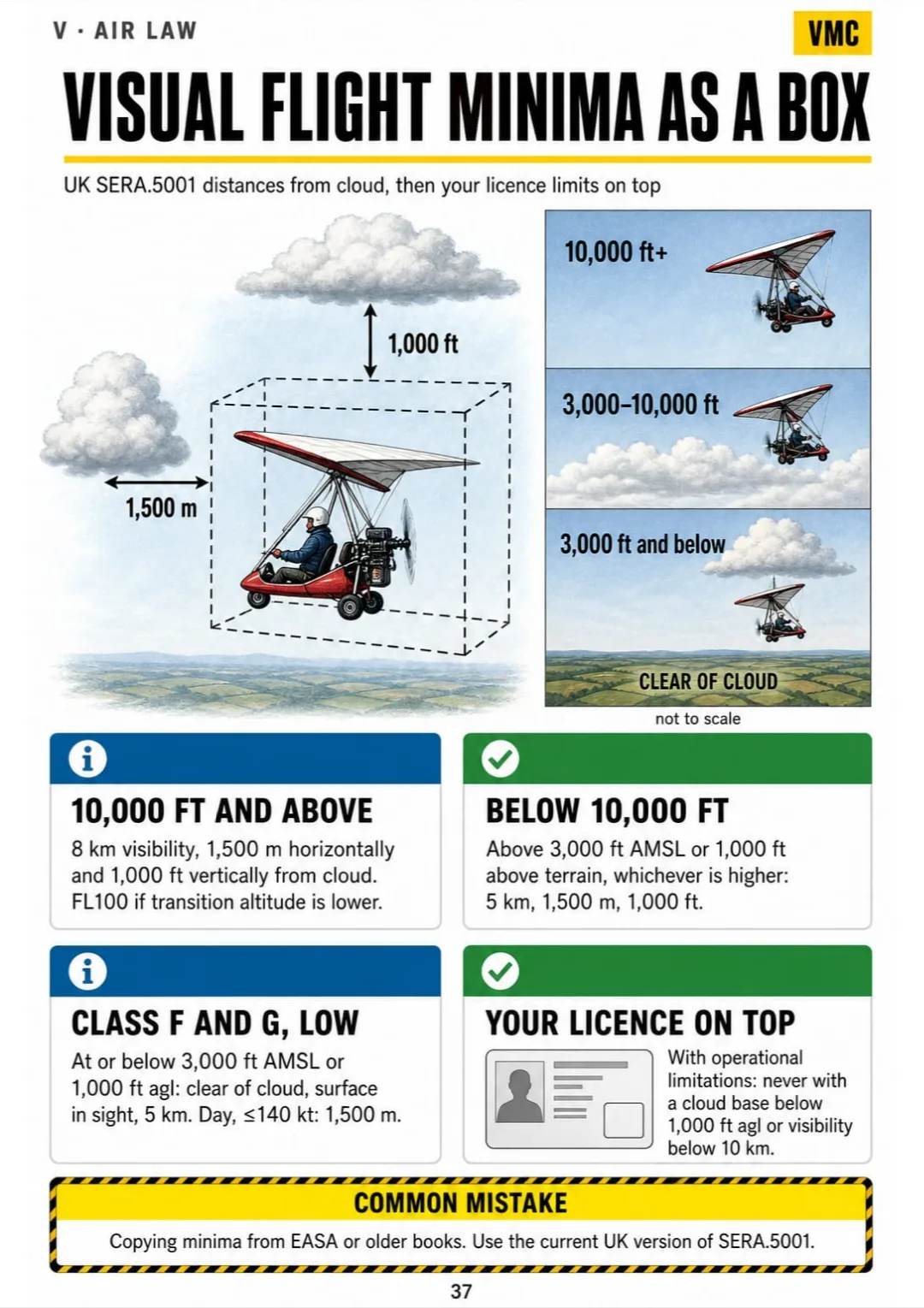
Class G at or below 3,000 ft: clear of cloud, surface in sight, 5 km
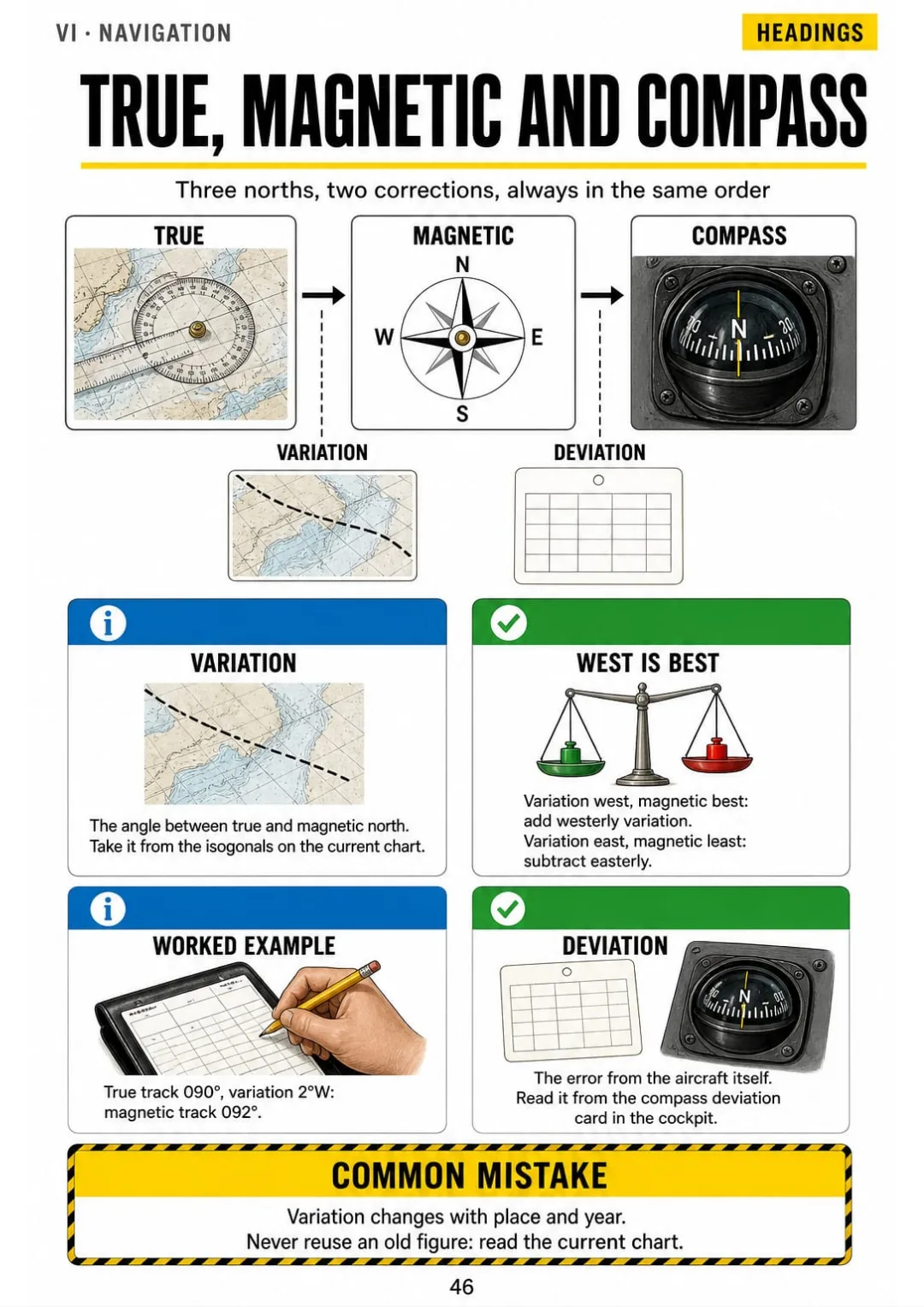
Variation west, magnetic best; variation east, magnetic least
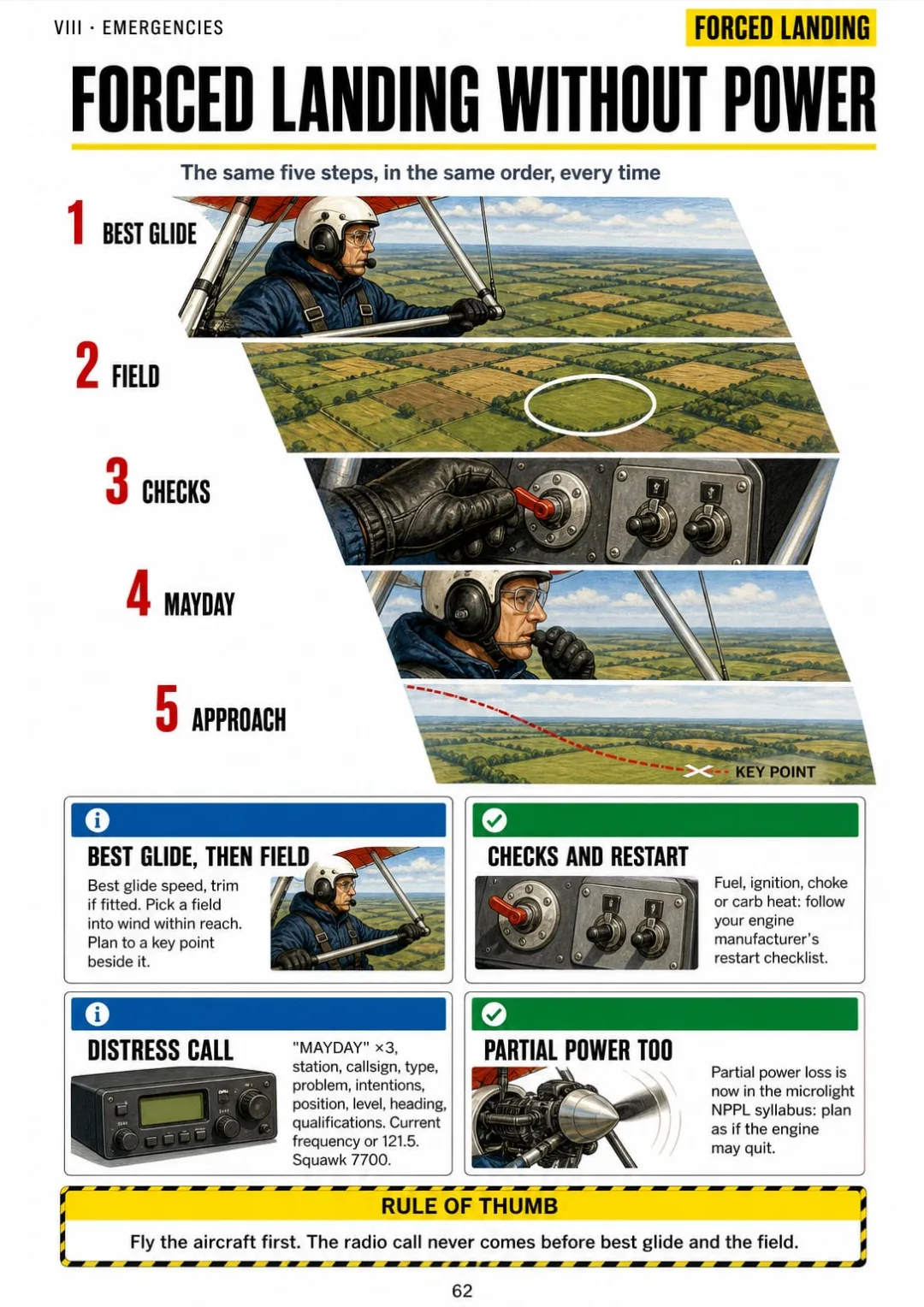
Best glide → field → checks → MAYDAY → approach to the key point
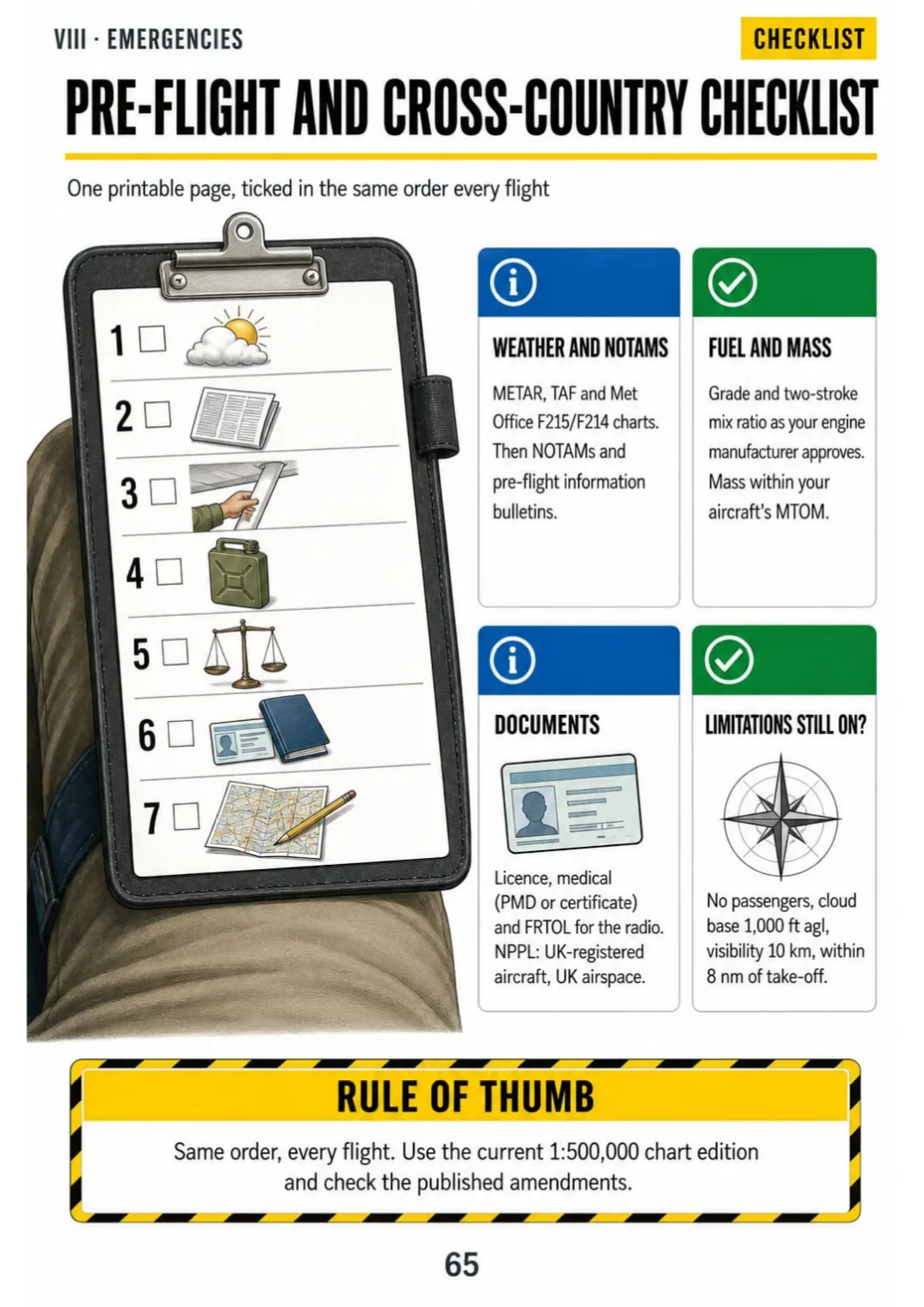
Weather, NOTAMs, inspection, fuel, mass, documents, plan: one page to print
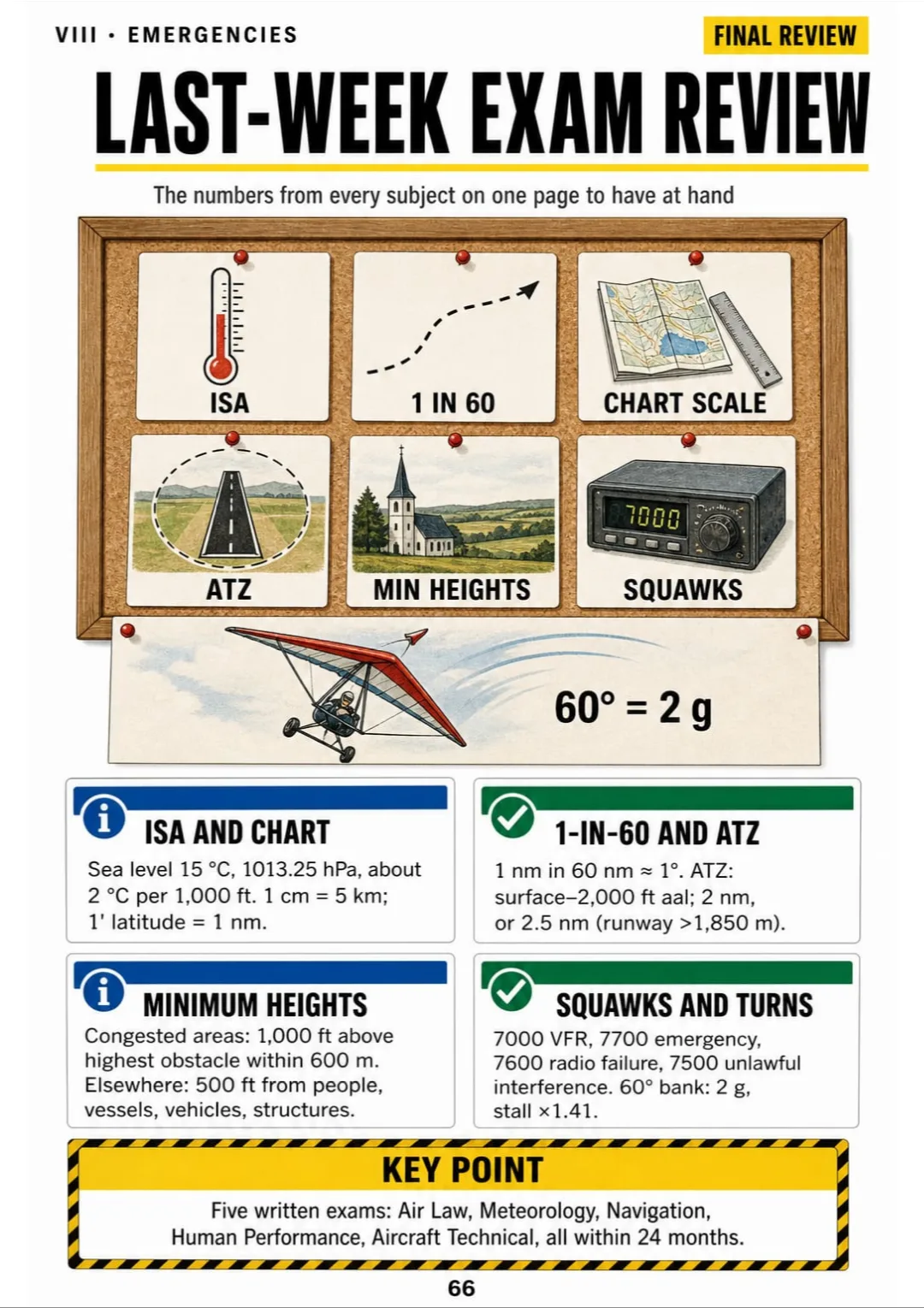
ISA, 1-in-60, chart scale, ATZ, minimum heights, squawks and stall in a turn

Swipe to see more →

These are real pages from the book. The table of contents is the full one: 8 parts and 62 topics.

The Problem Isn't You. It's How It Was Explained.

You're at the airfield, your instructor unfolds the 1:500,000 chart, taps a shaded patch and asks: "Can you fly through there, and at what height?"

You've been through the airspace chapter, but the manual gives it to you in paragraphs: classes, bases, ceilings and exceptions one after another. Nothing shows you how the layers sit on top of each other.

Class D needs a clearance; Class G is where most microlight flying happens

In this book, UK airspace is one page: a layered drawing. Class G at the bottom, where most microlight flying happens. Class D marked "clearance needed". Every base and ceiling labelled down the side.

The same goes for visual flight minima, the ATZ and MATZ, danger and restricted areas, minimum heights and altimeter settings: each one has its own page.

You look at the chart, see the layers in your head and give your answer without going back to the manual.

COMPARE FOR YOURSELF

The Same Topic, Two Ways to Study It

THIS
  • The manual: line after line
  • Fronts explained only in words
  • You reach the exam still unsure
A warm front represents the leading edge of a warm air mass which, being less dense, ascends gradually over the retreating colder air along a shallow frontal surface, typically with a slope in the order of 1:150. Its approach is characterised by a progressive lowering and thickening of cloud, from cirrus through cirrostratus and altostratus to nimbostratus, with continuous precipitation commencing some distance ahead of the surface position, falling pressure and a veer of wind upon passage, whereas the cold front exhibits a steeper slope and associated convective activity.
FOR THIS
  • The front in one cross-section drawing
  • The cloud and weather sequence in a box
  • You see it and you get it
Radiation fog: clear calm night. Advection fog: warm moist air over cold ground or sea
CONTENTS

Take a Look at the 8 Parts and 62 Topics

How a microlight flies, flexwing and three-axis controls, engines and systems, meteorology, air law and airspace, navigation, human performance and radio, and emergencies with a final review: 66 pages, all illustrated.

IHow a Microlight Flies · pp. 5-12
  1. The four forces on one drawing
  2. What makes lift
  3. Angle of attack is not pitch attitude
  4. The stall, step by step
  5. Stall speed in a turn
  6. Drag: the two curves
  7. Stability in three directions
  8. Glide ratio and best glide speed
IIFlexwing and Three-Axis Controls · pp. 13-18
  1. Three-axis controls: stick, rudder, throttle
  2. Flexwing controls: the bar works the other way
  3. Adverse yaw and the balanced turn
  4. How a flexwing stays stable
  5. Flexwing limits: tumble and negative g
  6. Flaps, trim and the effect of power
IIIEngines and Aircraft Systems · pp. 19-25
  1. Two-stroke and four-stroke on one page
  2. Fuel: mixtures, grades and contamination
  3. Carburettor icing
  4. Engine instruments and what they warn you about
  5. Propellers and ignition
  6. Pitot-static instruments
  7. Weight and balance worked example
IVMeteorology · pp. 26-34
  1. The standard atmosphere
  2. Density altitude: hot, high and humid
  3. Pressure systems and wind
  4. Surface wind versus 2,000 ft wind
  5. Stability, clouds and thermals
  6. Fronts drawn in cross-section
  7. Fog and low cloud
  8. Turbulence, rotor and wind shear
  9. Reading a METAR and a TAF
VAir Law and Airspace · pp. 35-44
  1. Your licence, medical and privileges
  2. UK airspace as a layered drawing
  3. Visual flight minima
  4. ATZ and MATZ
  5. Danger, restricted and prohibited areas
  6. Temporary restrictions and NOTAMs
  7. Rules of the air: who gives way
  8. Minimum heights
  9. Altimeter settings: QFE, QNH and 1013
  10. Airfield signals and circuit rules
VINavigation and Flight Planning · pp. 45-53
  1. The 1:500,000 chart
  2. True, magnetic and compass
  3. Measuring track and distance
  4. The wind triangle
  5. Time, distance and fuel
  6. The 1-in-60 rule
  7. Map reading in the air
  8. The pilot's log and route plan
  9. When you are unsure of position
VIIHuman Performance and Radio · pp. 54-60
  1. Fit to fly: the IMSAFE check
  2. Cold, noise and carbon monoxide
  3. Seeing other aircraft
  4. Disorientation and decision-making
  5. Radio basics and the phonetic alphabet
  6. Services from FIS and ATC
  7. Transponder codes and emergency calls
VIIIEmergencies and Final Review · pp. 61-66
  1. Engine failure after take-off
  2. Forced landing without power
  3. Choosing a field: the seven checks
  4. Precautionary landing
  5. Pre-flight and cross-country checklist
  6. Last-week exam review

One Page, One Topic, All Clear

Think of it this way:

It's the evening before your Navigation paper and a practice question gives you a true track of 090 with 2° west variation. You need the magnetic track, and you need to be sure.

You open the page on true, magnetic and compass and see it drawn: variation west, magnetic best, so 090 becomes 092.

Variation west, magnetic best; variation east, magnetic least

The same with stall speed in a turn, UK airspace, true and magnetic headings and the forced landing sequence: each one on its own page.

Microlight Pilot Theory Illustrated is 8 parts and 62 topics, all drawn, with a pre-flight checklist to print and a last-week exam review at the end.

What you see drawn, you don't have to memorize.

What's Inside Microlight Pilot Theory Illustrated:

Ipp. 5-12

How a Microlight Flies

The four forces, lift, angle of attack, the stall, stall speed in a turn, drag, stability and best glide.

IIpp. 13-18

Flexwing and Three-Axis Controls

Stick, rudder and throttle, the flexwing bar working the other way, adverse yaw, flexwing stability and limits, flaps and trim.

IIIpp. 19-25

Engines and Aircraft Systems

Two-stroke and four-stroke side by side, fuel, carburettor icing, engine instruments, propellers, pitot-static and a worked weight and balance example.

IVpp. 26-34

Meteorology

The standard atmosphere, density altitude, pressure and wind, clouds and thermals, fronts, fog, turbulence and reading a METAR and a TAF.

Vpp. 35-44

Air Law and Airspace

Know where you can fly and at what height: your licence and medical, UK airspace in layers, visual minima, ATZ and MATZ, restricted areas, NOTAMs, rules of the air, minimum heights, altimeter settings and circuit rules.

VIpp. 45-53

Navigation and Flight Planning

Plan a route and keep to it: the 1:500,000 chart, true and magnetic, track and distance, the wind triangle, time and fuel, the 1-in-60 rule, map reading, the pilot's log and what to do when unsure of position.

VIIpp. 54-60

Human Performance and Radio

The IMSAFE check, cold, noise and carbon monoxide, lookout, disorientation and decisions, radio basics, FIS and ATC services, transponder codes and emergency calls.

VIIIpp. 61-66

Emergencies and Final Review

Engine failure after take-off, the forced landing, choosing a field, the precautionary landing, a pre-flight checklist and a last-week exam review.

At the end of the book: A printable pre-flight and cross-country checklist and a last-week exam review page.
Plus: 2 Free Books

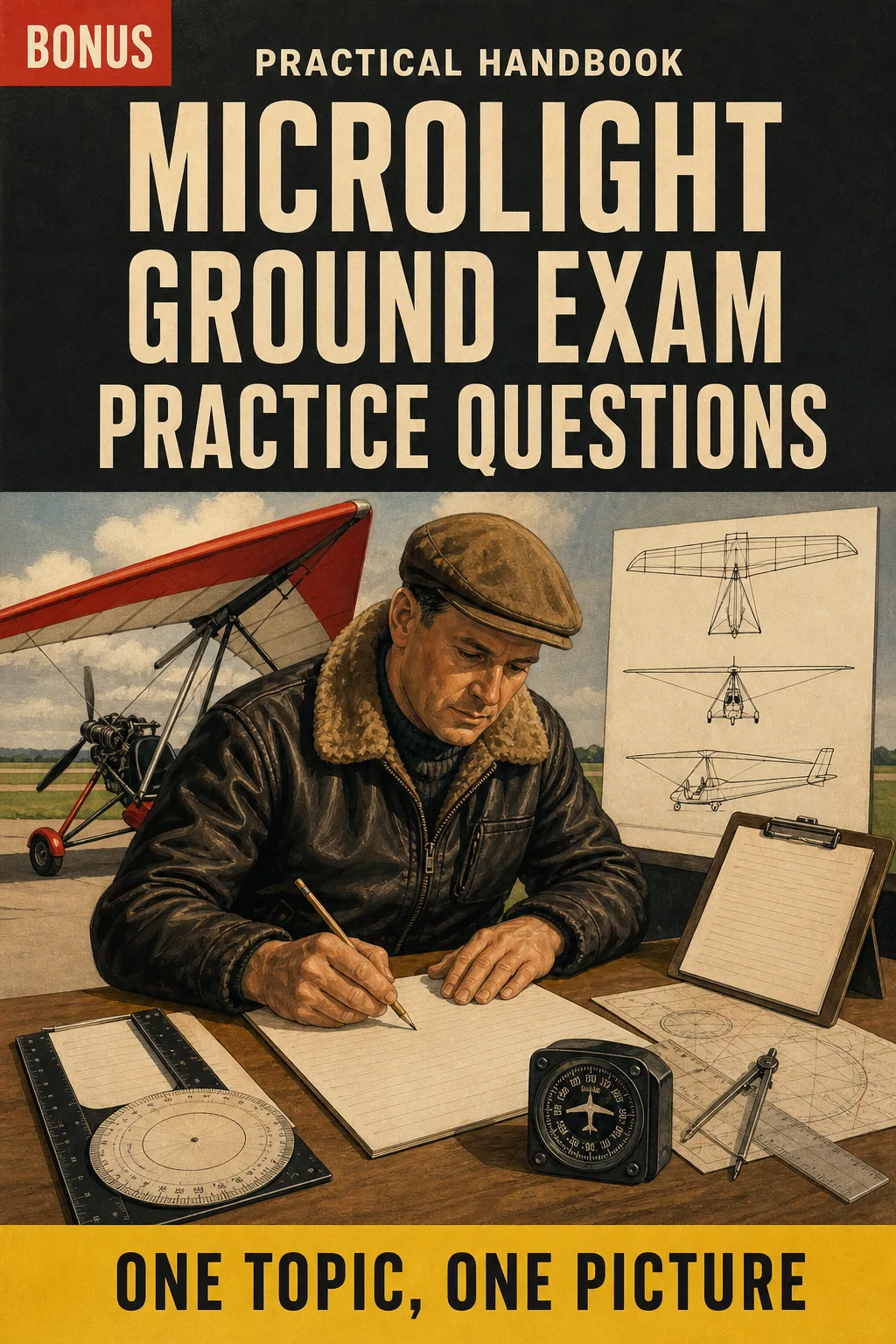
Microlight Ground Exam Practice Questions

BONUS 1: «Microlight Ground Exam Practice Questions»

Value on its own: US$ 17.90

Exam-style questions for every subject, each answer explained in one line, so you can see what you've really understood before the exam.

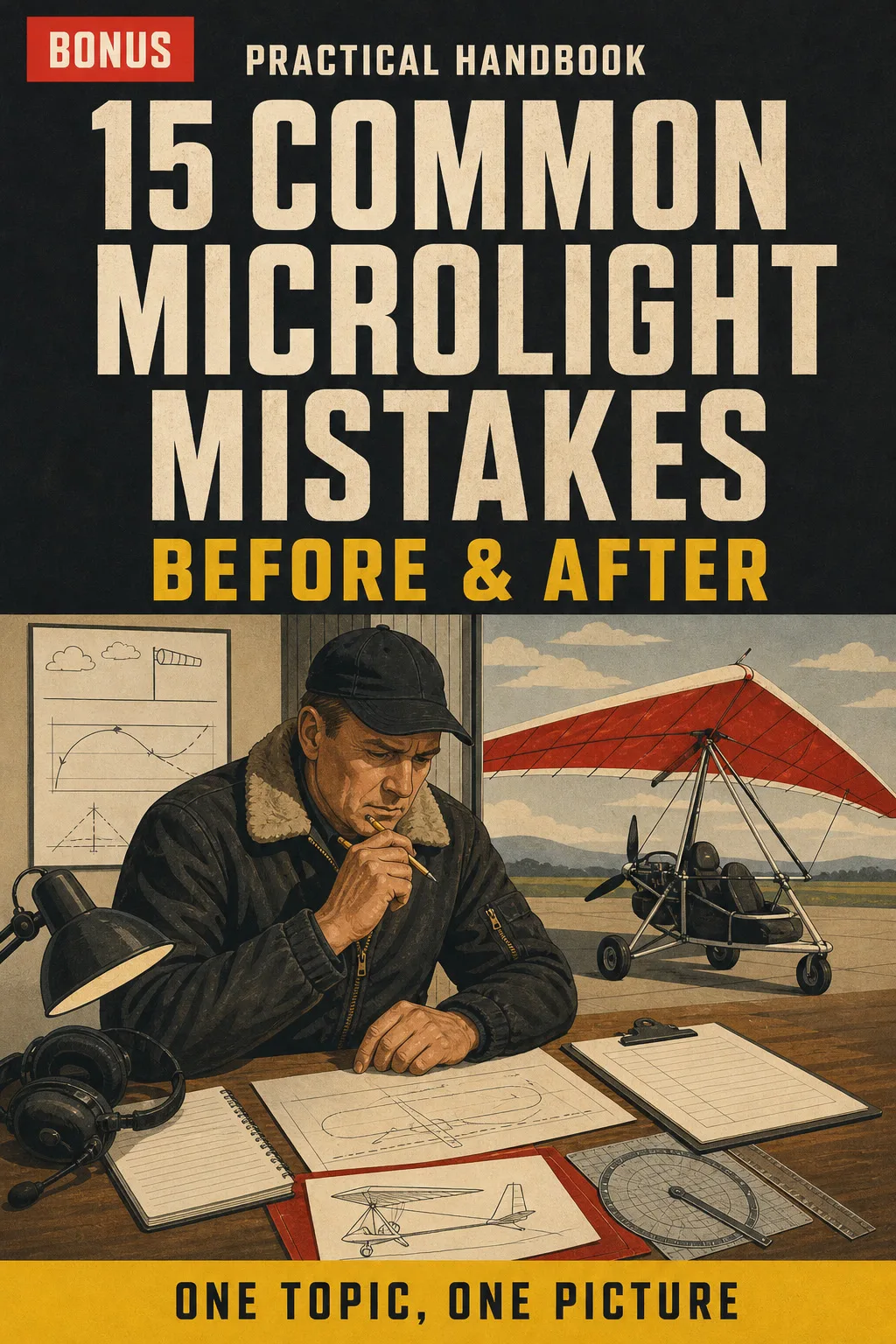
15 Common Microlight Mistakes: Before & After

BONUS 2: «15 Common Microlight Mistakes: Before & After»

Value on its own: US$ 14.90

The most frequent slips in theory and on the airfield, each drawn wrong then right, so you can spot them at a glance.

Microlight Pilot Theory Illustrated with 2 Free Books

  • Microlight Pilot Theory Illustrated: 66 illustrated pagesUS$ 63
  • BONUS 1: Microlight Ground Exam Practice QuestionsUS$ 17.90
  • BONUS 2: 15 Common Microlight Mistakes: Before & AfterUS$ 14.90
  • High-resolution PDF to printIncluded
Total value US$ 95.80
YOUR PRICE:
US$ 27
You save US$ 68.80
YES, I WANT MICROLIGHT PILOT THEORY ILLUSTRATED FOR US$ 27

📄 This is a digital PDF book sent to your email: nothing is printed or shipped.

Secure purchaseEncrypted payment30-day guarantee

PDF by email: We email you Microlight Pilot Theory Illustrated as a PDF, together with the two free books. It's a single payment: no installments, no extra charges.

Who This Book Is For

You're starting the ground theory

You're starting the ground theory

Every subject in one book and in the same order, so you know where each topic sits from the first weekend.

Your exams or solo are close

Your exams or solo are close

One page per topic to revise the night before, plus practice questions to see what has really sunk in.

You already hold the licence

You already hold the licence

A quick refresher on airspace, weather and radio before you fly again with an instructor.

Everything You Get Today

US$ 95.80US$ 27
YES, I WANT MICROLIGHT PILOT THEORY ILLUSTRATED FOR US$ 27

📄 This is a digital PDF book sent to your email: nothing is printed or shipped.

30DAYS
GUARANTEE

30-Day Guarantee

Try Microlight Pilot Theory Illustrated for 30 days, bonus books included.

We refund everything if the file won't open, if the book isn't what you see here, if you were charged twice or if the email doesn't arrive. Just email us.

You pay once. No subscriptions.

Frequently Asked Questions

Is it for me if I fly a flexwing rather than a three-axis?

Yes. Flexwing and three-axis controls are drawn side by side, and the shared subjects apply to both. It covers the five UK ground exams (Air Law, Meteorology, Navigation, Human Performance, Aircraft Technical) and is written for UK airspace: the 1:500,000 chart, QNH and QFE in hPa, knots and feet. It isn't an American book.

Where does the content come from?

It's checked against current UK aviation publications: the Air Navigation Order, the UK Rules of the Air, the Radiotelephony Manual (CAP 413), the UK AIP and the current 1:500,000 charts, cross-checked against the microlight ground exam syllabus.

Is it official material?

No. It's an independent illustrated study book. It isn't issued or endorsed by the CAA or any other organisation, and it doesn't give you a certificate or count towards your licence: your exams and flight training are done through your school.

Does it replace my flying school or instructor?

No. It's study material to go alongside your training, not instead of your school's manuals: it puts the same syllabus into drawings, one topic per page, so you can revise it quickly. If your instructor or school procedures differ on a point, follow them. It doesn't replace your instructor, your aircraft's flight manual or the official publications, and weight and balance limits always come from your aircraft's own documents.

Are the practice questions the real exam questions?

No. They're written for this book, in the style of the ground exams, to help you check what you've understood. They aren't official exam questions.

When and how does it arrive?

As a PDF by email, to the address you enter at checkout, together with the 2 bonus books.

Do I have to pay every month?

No. It's a one-off payment.

Can I have it on paper?

Yes. The PDF prints well at home or at a print shop, so you can keep it in your flight bag or take it to the club.

How does the refund work?

You have 30 days. We refund everything if the file won't open, if the book isn't what you see on this page, if you were charged twice or if the email doesn't arrive: just email us.

Before You Close This Page

No more rereading with nothing sticking.

Airspace layers you can see, drawn on one page.

You walk into the exam knowing where everything is.

Drawings make studying faster.

The book is right below.

One-time payment: US$ 27 · Guarantee: 30 days · PDF by email

YES, I WANT MICROLIGHT PILOT THEORY ILLUSTRATED FOR US$ 27

📄 This is a digital PDF book sent to your email: nothing is printed or shipped.